Is lithium battery safe?
2026-01-10 16:51:59


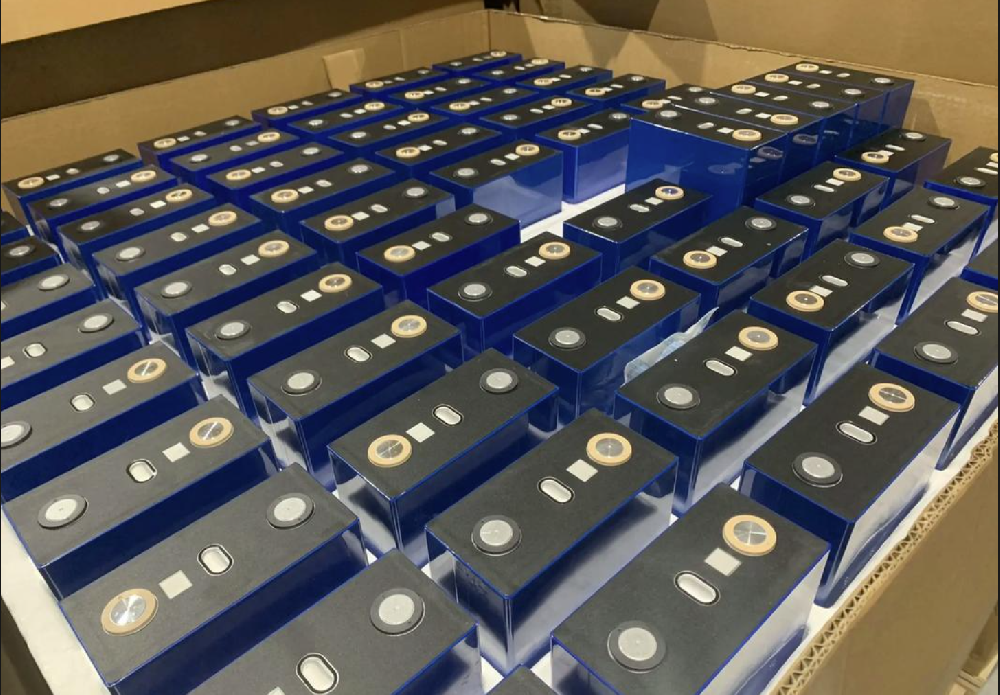
Is lithium battery safe?
The Correct Charging Method for Lithium Iron Phosphate Batteries
Which has the longest lifespan: graphene, sodium batteries, lithium batteries? Why is the lithium iron phosphate battery recommended?
How long does the service life of lithium iron phosphate batteries typically last?
According to QY Research statistics, the global market sales of solid-state batteries for drones will reach 0.48 billion US dollars in 2025, and is expected to soar to 17.97 billion US dollars by 2032, with a compound annual growth rate of 65.0% from 2026 to 2032. China, as the core growth driver, will have a market size of 32 million US dollars in 2025, accounting for more than 66% of the global market share. Leveraging technological breakthroughs and scene implementation advantages, it is expected that the market size will exceed 9 billion US dollars in 2032, maintaining a global market share of over 50%.
I. Core Industry Understanding and Industry Chain Structure
Drones' solid-state batteries replace traditional liquid electrolytes with solid electrolytes and achieve energy storage through the "ion solid-state conduction - electrochemical reaction" mechanism. They are specifically designed for the lightweight, long-range, and high-safety requirements of drones and can operate stably in an extremely wide temperature range of -40°C to 150°C. The current industry gross profit margin has recovered from the early research and development loss range of -10% to 12%-18%, and leading enterprises have exceeded 25% with the advantage of mass production.
The upstream of the industry focuses on materials and equipment. The cost of solid electrolytes accounts for more than 40%. The oxide route has achieved mass production first. Xingjie Energy, relying on its independently developed HICORE solid electrolyte technology, has launched the "Falcon" battery with an energy density of 480 Wh/kg. The downstream demand shows a B-end dominant feature. Industrial-grade drones account for 68%, while consumer-grade and military-grade account for 22% and 10% respectively. Logistics distribution and power inspection are the core application scenarios.
II. Market Driving Factors and Technological Iteration
Application scenarios expansion becomes the core engine. In 2025, the number of unmanned aircraft flights in Hainan exceeded 11 million, with an average annual growth rate of over 60%. The demand for long-range flights drove the penetration rate of solid-state batteries to increase. Xingjie Energy's battery was equipped with EHang's eVTOL for a cross-sea flight, with a 60%-90% improvement in range compared to traditional batteries, enhancing the single-operation efficiency of industrial-grade unmanned aircraft by 40%.
Safety regulations and technological upgrades provide dual empowerment. Global standards such as UN38.3 are becoming stricter, limiting the fire risk of traditional liquid batteries, and the advantages of solid-state batteries in passing needle-puncture tests with zero thermal runaway become prominent. Currently, semi-solid batteries have entered small-scale production, with a 2026 production capacity of 8% and an energy density of over 350 Wh/kg. The full-solid battery is expected to start pilot production in 2026.
III. Core Market Opportunities Analysis
The policy dividends of the low-altitude economy continue to be released. China has included low-altitude economy in strategic emerging industries, and the policies of Hainan Free Trade Port have reduced the manufacturing cost of low-altitude equipment by 30%. In 2025, multiple provinces and cities initiated urban air transportation pilot projects, and eVTOL became the core breakthrough point for solid-state batteries. It is expected that the demand for solid-state batteries in the low-altitude economy sector will grow at an average annual rate of over 80% from 2026 to 2028.
The opportunities of technological routes and production capacity layout are prominent. The three major routes of oxide, sulfide, and polymer are parallel, and domestic enterprises have formed technical barriers in the oxide route. Xingjie Energy's 5GWh production line is gradually being implemented, and the first 2GWh capacity will be released in 2026. At the same time, the "equipment manufacturer + battery factory + complete machine manufacturer" cooperation model accelerates commercialization, and Haomi Star provides the complete line equipment for Xingjie Energy, promoting an average annual reduction of 15% in production costs.
Regional market differentiation opportunities are emerging. North America and Europe focus on military and high-end industrial markets, China and Southeast Asia focus on the popularization of civilian scenarios, and India relies on agricultural pesticide spraying demand to rapidly scale up, forming a global multi-point growth pattern.
IV. Industry Conclusion and Development Outlook
The unmanned aircraft solid-state battery industry is currently at a critical turning point from technical verification to large-scale production. The 65% high compound growth rate confirms the blue ocean attribute. China, with material domestication (the domestication rate of silicon-carbon negative electrodes reaching 82%), policy support, and scene implementation advantages, will continue to dominate the global market.
In the next three years, semi-solid batteries will achieve large-scale popularization, and full-solid batteries will gradually break through the bottleneck of pilot production. Leading enterprises will seize the market through technological barriers and production capacity advantages. It is recommended that enterprises focus on industrial-grade customized demands, strengthen industrial chain collaboration, and build differentiated competitiveness in low-altitude economy, emergency rescue and other scenarios, seizing the opportunities of the 100-billion-dollar market.